The Car
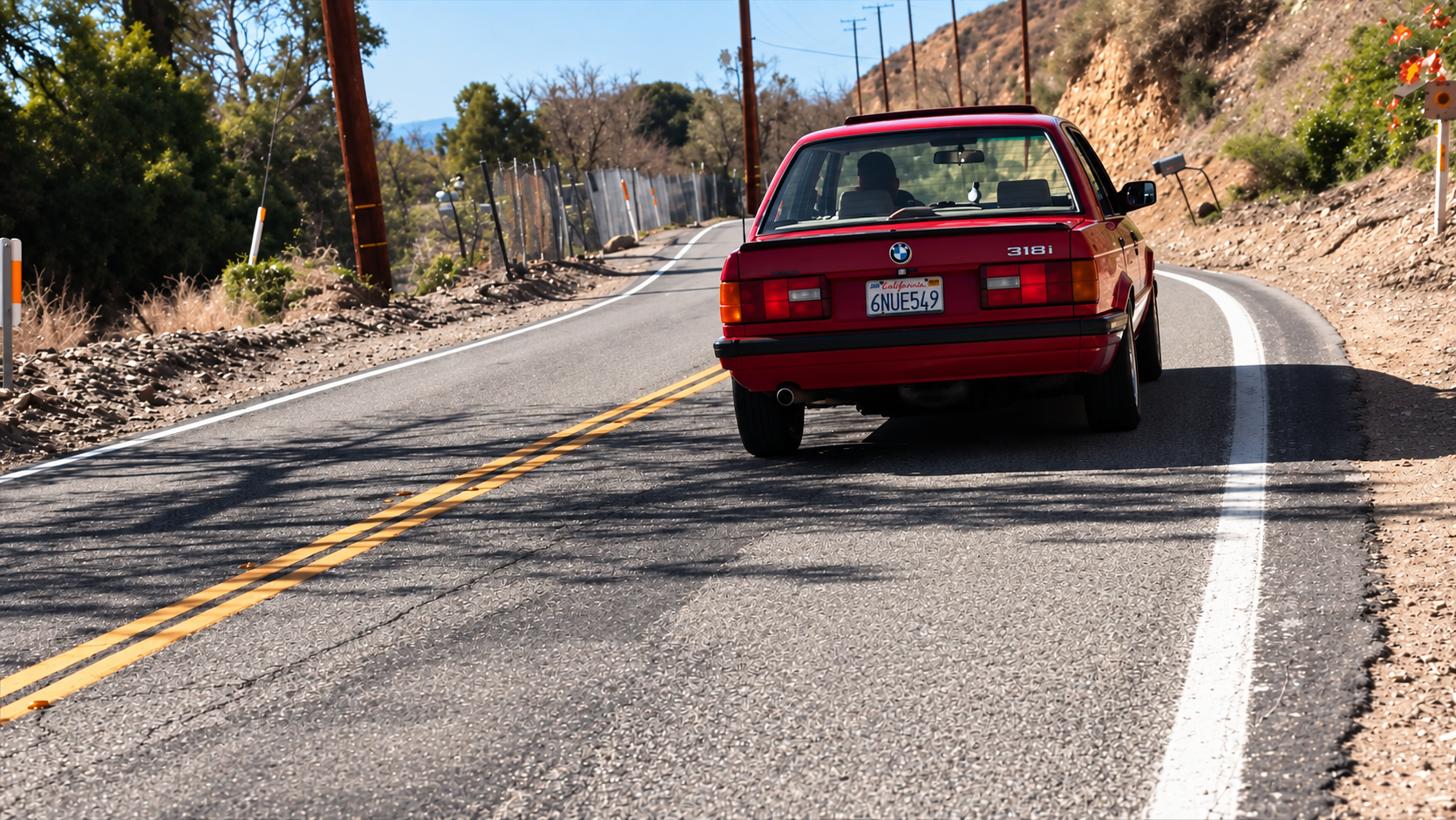
What I remember first is the red. Not just red, but Hellrot—BMW's bright, uncomplicated version of it. The name sounded serious; the color wasn't. It stood out in a driveway, in a parking lot, and against the dry Southern California mountains. Even now, when I picture the car, I see the color before anything else.
Mine was a 1991 BMW 318i, an E30 with a naturally aspirated four-cylinder making somewhere around 150 horsepower. It wasn't fast in the way people usually mean when they talk about fast cars. I knew that when I bought it, and I never needed to convince myself otherwise. The appeal was simpler: I liked looking at it, I liked being inside it, and I looked for reasons to drive it.
There was something especially satisfying about walking back toward it. The shape was clean and familiar, the proportions right, and the Hellrot paint made sure it never disappeared into the background. People stopped to talk about it. Some knew exactly what it was; others just knew they liked it. I never got tired of those conversations, or of that small pause before opening the door and getting back in.
For a car wearing such an attention-grabbing color, it never brought me trouble. I somehow made it through my time with the E30 without a speeding ticket. That still makes me laugh. A bright red BMW seems like the wrong car for going unnoticed, but maybe the car and I understood each other. It wasn't about charging down every straight. It was about finding a road where the whole thing came together.
The Road
That road was in the mountains. The E30 felt most like itself there, where the pavement climbed, tightened and changed direction. With modest power, I couldn't be careless about losing momentum. I had to look ahead, choose a line and stay smooth. If I slowed too much, the little four-cylinder had to work to bring the speed back. That made every corner feel connected to the next one.
I liked the effort of it. I liked keeping the engine in the part of the rev range where it felt awake, then listening to it work as the road rose. There was no great shove when I pressed the throttle, just a steady response and the sense that the car was doing exactly what I asked. On a winding road, 150 horsepower could occupy all of my attention.
The steering carried the texture of the road into my hands. I could feel a change in the surface, the angle of a corner and the moment the car settled after turning in. The chassis moved enough to let me know what was happening without ever feeling loose or rough. It was comfortable, composed and still connected. That balance is what I loved about BMWs from that period, and the E30 expressed it without making a performance out of it.
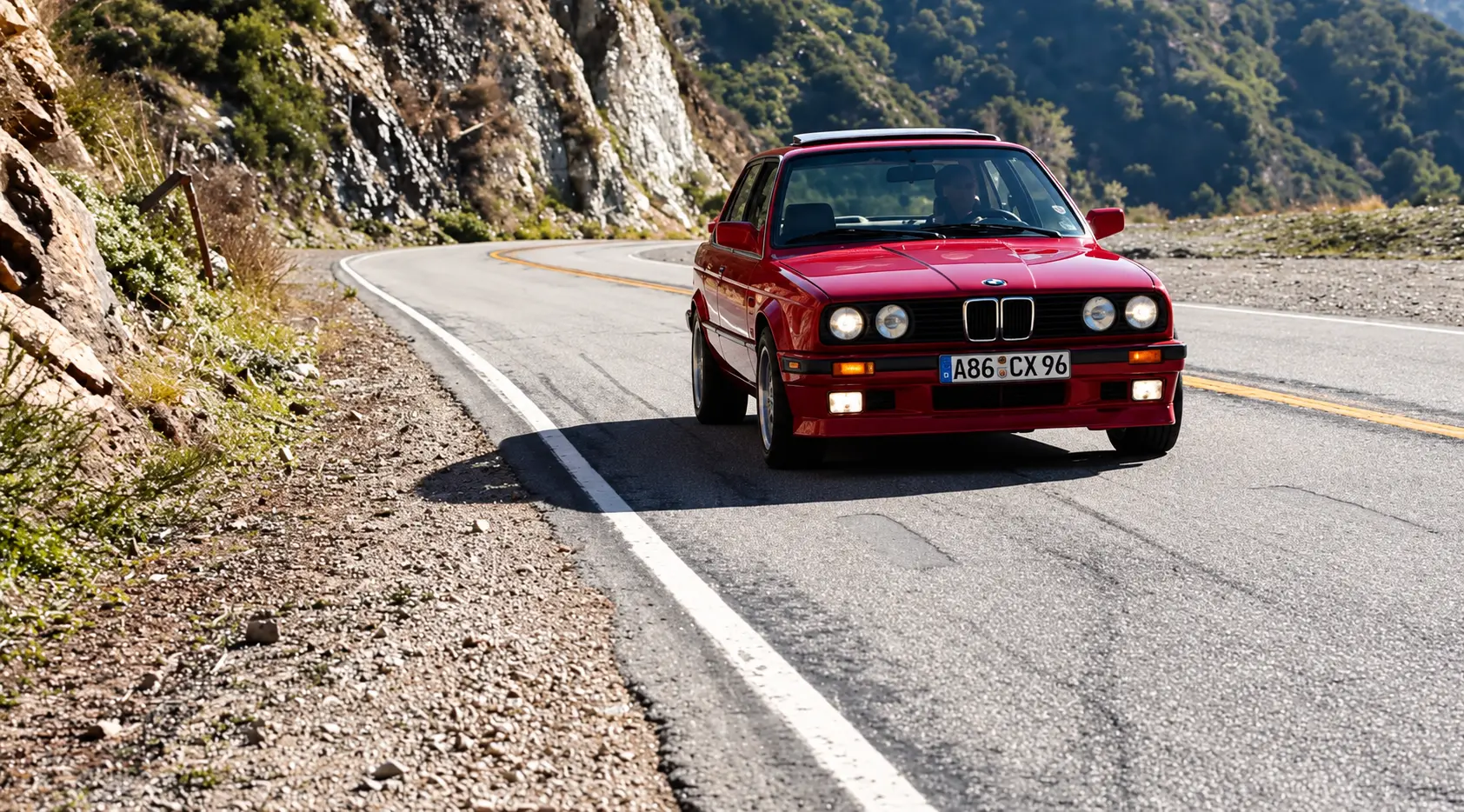
The E30 never asked me to drive faster. It asked me to pay attention.
There was a rhythm to driving it well. Brake, turn, let the car settle, then get back into the throttle and keep the engine moving. When I got it right, the car felt light and willing. When I got it wrong, there wasn't enough power to hide the mistake. I didn't mind. The point was never to arrive at the top of the road quickly. The point was that the drive there felt like something.
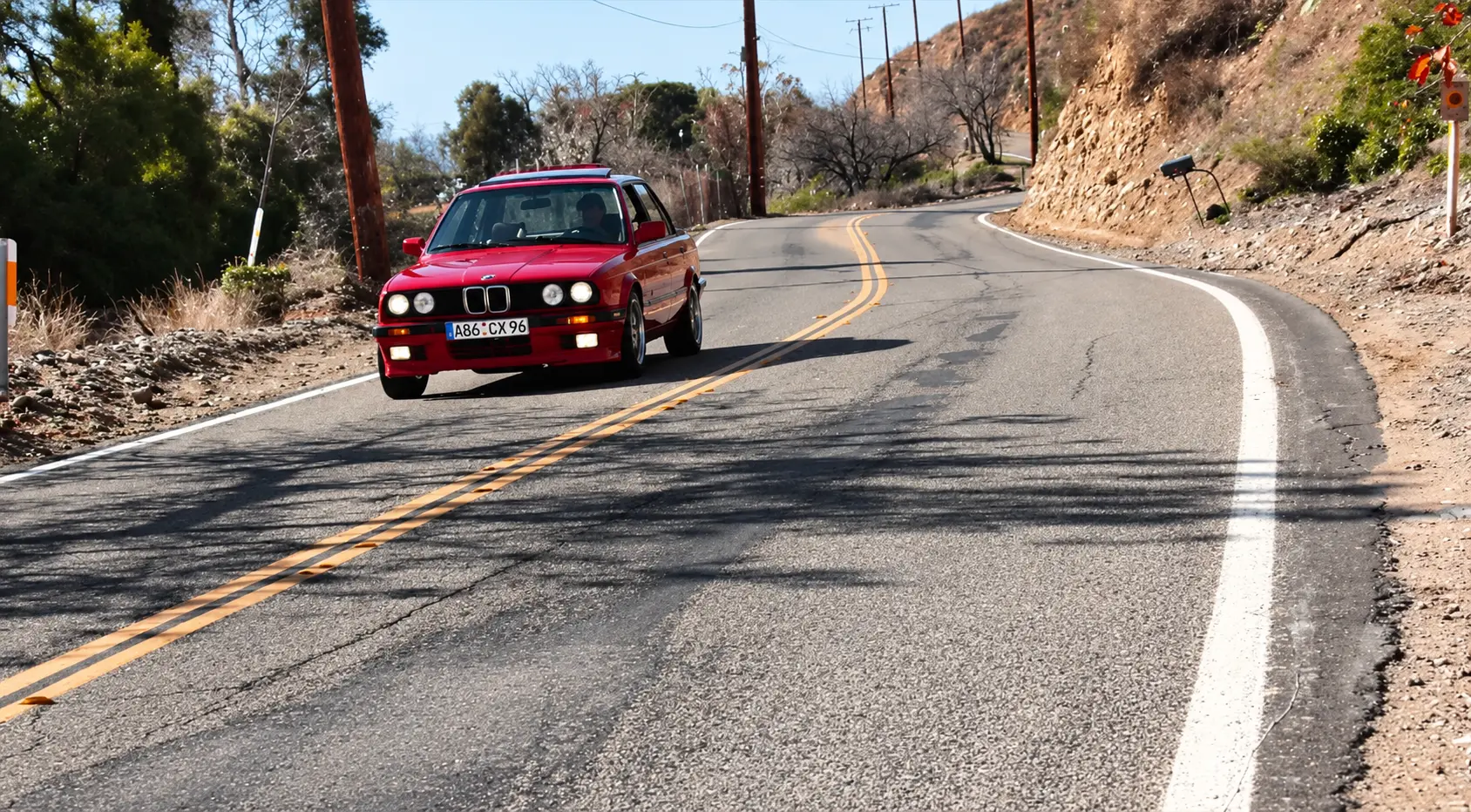
The Hellrot paint was part of that feeling. I would catch the hood at the bottom of my view, a flash of red against the road and the pale landscape around it. At a turnout or back in the driveway, the color seemed to hold onto the energy of the drive. The car was not rare because of some specification or number. It was special to me because I knew what it felt like when that red shape and that mountain road met on a good day.
Lola
Then Lola came into my life, and the way I looked at the E30 began to change. She was a German Shepherd. She was big, she needed space, and she became more important to me than any car could be. That part was immediate. What took longer was admitting what it meant for the red BMW sitting outside.
I could put Lola in the back seat, but that wasn't the same as the car making sense for us. The E30 had been easy to justify when it only needed to fit me and the road I wanted to drive. With her in my life, every trip carried a different question: would she be comfortable, would there be enough room, was I choosing the car because it worked or because I didn't want to let it go? I already knew the answers.
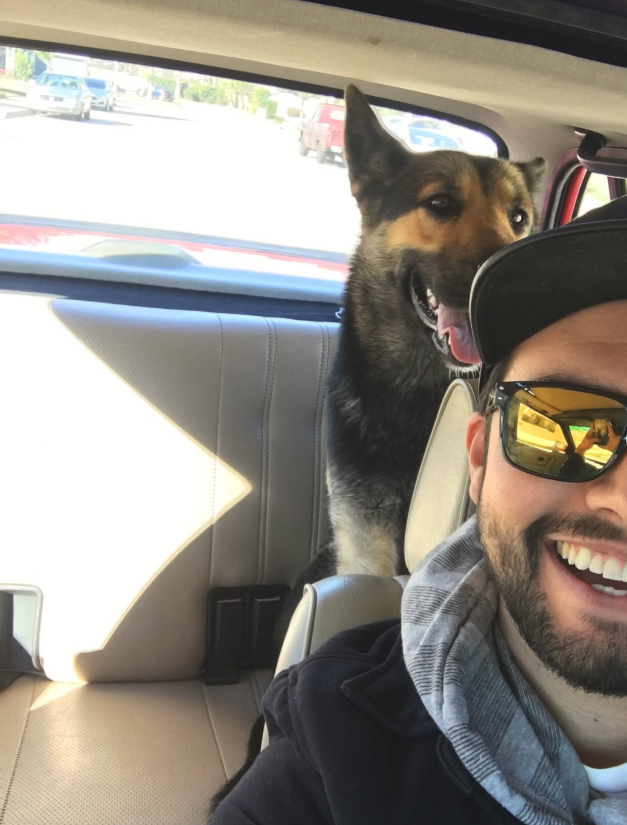
The photograph from Lola's rescue day holds both sides of the story for me. There I am with this dog who was about to become such a large part of my life, and behind us is the E30 I loved. At the time, it was simply a photograph of a happy day. Looking at it now, it also feels like a quiet record of the decision that was coming.
Nothing was wrong with the BMW. That made the choice harder, not easier. I wasn't tired of it. I hadn't reached the end of some project or fallen out of love with driving it. My life had just changed shape, and the E30 no longer fit that shape as naturally as it once had.
Eventually I sold it and bought a Subaru Outback. For life with a German Shepherd, the Outback made sense in a way the BMW never would. There was room for Lola, room for the things that came with her, and no need to negotiate every drive with the limitations of a small old sedan. It was the right decision. Knowing that did not make watching the E30 leave feel any better.
I didn't outgrow the E30. My life simply made room for something more important.